Wednesday, 7 March 2018

New York

Image result for new york
      New York is a state in the northeastern United States. New York was one of the first thirteen settlements that framed the United States. With an expected 19.85 million inhabitants in 2017, it is the fourth most crowded state in the United States. To separate from its city with a similar name, it is infrequently called New York State.

Related imageThe state's most crowded city, New York City makes up more than 40% of the state's populace. 66% of the state's populace lives in the New York metropolitan region, and almost 40% lives on Long Island. The state and city were both named for the seventeenth century Duke of York, the future King James II of England. With an expected populace of 8.55 million out of 2015, New York City is the most crowded city in the United States and the chief portal for lawful migration to the United States. The New York Metropolitan Area is a standout amongst the most crowded in the world. New York City is a worldwide city, home to the United Nations Headquarters and has been portrayed as the social, money related, and media capital of the world, and in addition the world's most financially intense city. The following four most crowded urban communities in the state are Buffalo, Rochester, Yonkers, and Syracuse, while the state capital is Albany.
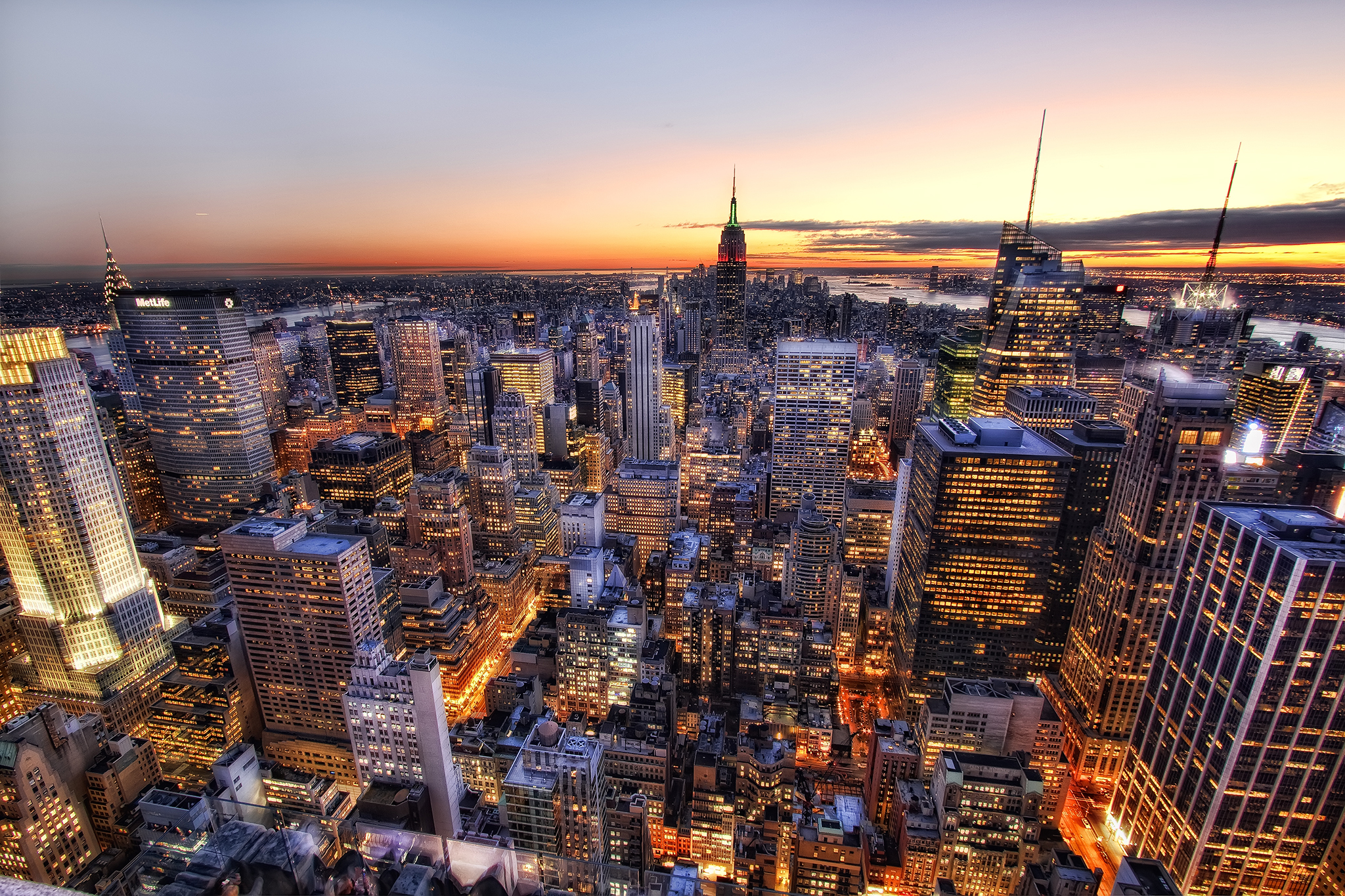
Image result for new yorkNew York has a different geology. The state is flanked by New Jersey and Pennsylvania toward the south and Connecticut, Massachusetts, and Vermont toward the east. The state has a sea outskirt with Rhode Island, east of Long Island, and in addition a worldwide fringe with the Canadian territories of Quebec toward the north and Ontario toward the northwest. The southern piece of the state is in the Atlantic Coastal Plain and comprises of Long Island and a few littler related islands, and additionally New York City and the lower Hudson River Valley. The vast Upstate New York area comprises of a few scopes of the more extensive Appalachian Mountains, and the Adirondack Mountains in the Northeastern projection of the state. These more precipitous areas are cut up by two noteworthy waterway valleys—the north-south Hudson River Valley and the east-west Mohawk River Valley. Western New York is thought about piece of the Great Lakes Region and outskirts Lake Ontario, Lake Erie, and Niagara Falls. The focal piece of the state is commanded by the Finger Lakes, a famous excursion and vacationer goal.


Image result for new york
New York had been occupied by clans of Algonquian and Iroquoian-speaking Native Americans for a few hundred years when the soonest Europeans came to New York. French settlers and Jesuit ministers arrived southward from Montreal for exchange and converting. In 1609, the area was gone to by Henry Hudson cruising for the Dutch East India Company. The Dutch constructed Fort Nassau in 1614 at the conjunction of the Hudson and Mohawk waterways, where the present-day capital of Albany later created. The Dutch soon likewise settled New Amsterdam and parts of the Hudson Valley, building up the multicultural province of New Netherland, a focal point of exchange and movement. Britain grabbed the state from the Dutch in 1664. Amid the American Revolutionary War (1775– 1783), a gathering of pioneers of the Province of New York endeavored to take control of the British state and in the long run prevailing with regards to setting up autonomy.

Image result for new york
Numerous milestones in New York are notable, including four of the world's ten most-went to vacation spots in 2013: Times Square, Central Park, Niagara Falls (imparted to Ontario), and Grand Central Terminal. New York is home to the Statue of Liberty, an image of the United States and its standards of flexibility, vote based system, and opportunity. In the 21st century, New York has developed as a worldwide hub of innovativeness and entrepreneurship, social tolerance, and natural sustainability. New York's advanced education organize involves around 200 schools and colleges, including Columbia University, Cornell University, New York University, and Rockefeller University, which have been positioned among the main 35 in the world.
Since the mid nineteenth century, New York City has been the biggest port of passage for lawful movement into the United States. In the United States, the central government did not accept coordinate ward for migration until 1890. Preceding this time, the issue was appointed to the individual states, at that point by means of agreement between the states and the government. Most migrants to New York would land at the clamoring docks along the Hudson and East Rivers, in the inevitable Lower Manhattan. On May 4, 1847, the New York State Legislature made the Board of Commissioners of Immigration to control immigration.

Image result for new york
The main changeless migration station in New York was built up in 1855 at Castle Garden, a changed over War of 1812 period fortification situated inside what is currently Battery Park, at the tip of Lower Manhattan. The principal workers to touch base at the new stop were on board three ships that had quite recently been discharged from isolate. Palace Garden filled in as New York's migrant station until the point that it shut on April 18, 1890, when the government accepted control over movement. Amid that period, in excess of 8 million settlers went through its entryways (two out of each three U.S. immigrants).

Related image
At the point when the central government accepted control, it set up the Bureau of Immigration, which picked the three-section of land Ellis Island in Upper New York Harbor for a passage terminal. As of now governmentally controlled, the island had filled in as an ammo stop. It was picked due its relative detachment with nearness to New York City and the rail lines of Jersey City, New Jersey, by means of a short ship ride. While the island was being created and extended by means of land recovery, the government worked a transitory station at the Barge Office at the Battery.

Ellis Island opened on January 1, 1892, and worked as a focal movement focus until the point when the National Origins Act was passed in 1924, diminishing migration. After that date, the main settlers to go through were dislodged people or war evacuees. The island stopped all migration handling on November 12, 1954, when the keep going individual kept on the island, Norwegian sailor Arne Peterssen, was discharged. He had outstayed his shore leave and left on the 10:15 a.m. Manhattan-bound ship to come back to his ship.

In excess of 12 million settlers went through Ellis Island in the vicinity of 1892 and 1954. In excess of 100 million Americans over the United States can follow their lineage to these migrants.

Image result for new yorkEllis Island was the subject of a quarrelsome and long-running outskirt and jurisdictional debate between New York State and the State of New Jersey, as both asserted it. The issue was settled in 1998 by the U.S. Preeminent Court which decided that the first 3.3-section of land (1.3 ha) island was New York State an area and that the adjust of the 27.5 sections of land (11 ha) included after 1834 via landfill was in New Jersey. The island was added to the National Park Service framework in May 1965 by President Lyndon B. Johnson is as yet possessed by the Federal government as a major aspect of the Statue of Liberty National Monument. Ellis Island was opened to the general population as an exhibition hall of movement in 1990.

Berlin

Image result for germany berlin
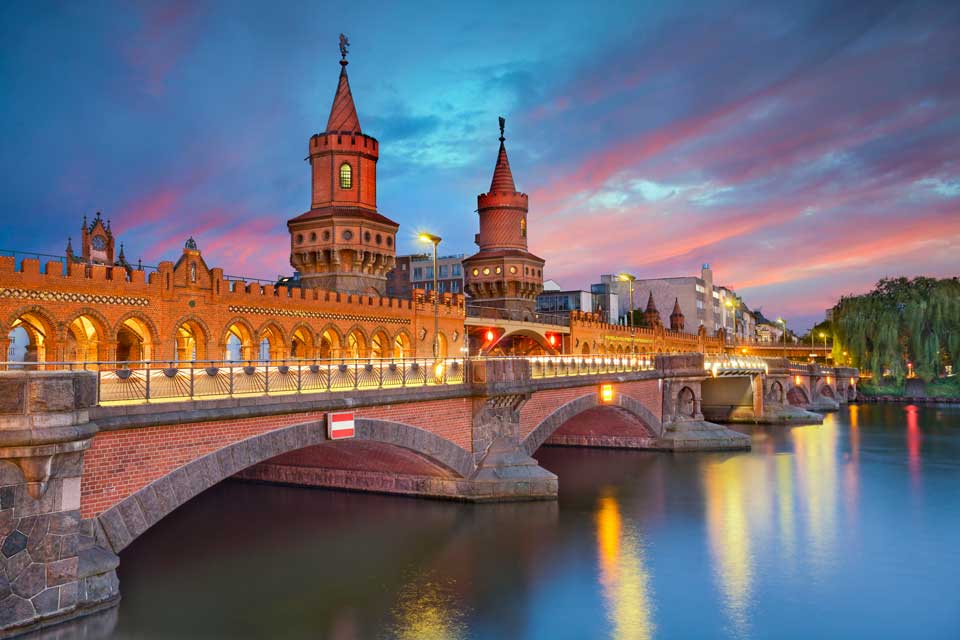
Berlin is a world city of culture, legislative issues, media and science. Its economy depends on innovative firms and the administration segment, enveloping a various scope of imaginative businesses, inquire about offices, media organizations and tradition venues. Berlin fills in as a mainland center for air and rail movement and has an exceptionally complex open transportation arrange. The city is a well known vacationer destination. Significant ventures likewise incorporate IT, pharmaceuticals, biomedical building, clean tech, biotechnology, development and hardware.
Image result for germany berlinIs the capital and the biggest city of Germany, and also, one of its 16 constituent states. With a relentlessly developing populace of around 3.7 million, Berlin is the second most crowded city legitimate in the European Union. Berlin is behind London and the seventh most crowded urban territory in the European Union. Located in northeastern Germany on the banks of the streams Spree and Havel, it is the focal point of the Berlin-Brandenburg Metropolitan Region, which has about 6 million occupants from in excess of 180 nations. Due to its area in the European Plain, Berlin is impacted by a calm regular atmosphere. Around 33% of the city's region is made out of woodlands, parks, gardens, streams, waterways and lakes.
Image result for germany berlinInitially recorded in the thirteenth century and arranged at the intersection of two essential memorable exchange routes,Berlin turned into the capital of the Margraviate of Brandenburg (1417– 1701), the Kingdom of Prussia (1701– 1918), the German Empire (1871– 1918), the Weimar Republic (1919– 1933) and the Third Reich (1933– 1945). Berlin in the 1920s was the third biggest district in the world.After World War II and its ensuing occupation by the successful nations, the city was partitioned; East Berlin was pronounced capital of East Germany, while West Berlin turned into an accepted West German exclave, encompassed by the Berlin Wall (1961– 1989) and East German territory. Following German reunification in 1990, Berlin by and by turned into the capital of all of Germany.


Present day Berlin is home to widely acclaimed colleges, ensembles, exhibition halls, and amusement scenes, and is host to numerous brandishing events. Its urban setting has made it a looked for after area for worldwide film productions. The city is outstanding for its celebrations, differing design, nightlife, contemporary expressions and a high caliber of living. Since the 2000s Berlin has seen the rise of a cosmopolitan entrepreneurial scene.
Image result for germany berlin

Image result for germany berlin

Image result for germany berlin

London

  Related image          London is a main worldwide city in expressions of the human experience, trade, training, excitement, mold, fund, social insurance, media, proficient administrations, innovative work, tourism and transportation. It is the world's biggest money related focus and has the fifth or 6th biggest metropolitan territory GDP on the planet. London is regularly viewed as a world social capital. It is the world's most-gone to city as estimated by global entries and has the world's biggest city airplane terminal framework estimated by traveler movement. It is the world's driving speculation goal, facilitating more global retailers and ultra high-total assets people than some other city. London's colleges frame the biggest grouping of advanced education establishments in Europe. In 2012, London turned into the principal city to have facilitated the cutting edge Summer Olympic Games three times.

Image result for londonLondon has a differing scope of individuals and societies, and in excess of 300 dialects are talked in the area. Its assessed mid-2016 metropolitan populace (relating to Greater London) was 8,787,892, the biggest of any city in the European Union and representing 13.4% of the UK populace. London's urban region is the second most crowded in the EU, after Paris, with 9,787,426 occupants at the 2011 registration. The city's metropolitan region is the most crowded in the EU with 14,040,163 tenants out of 2016, while the Greater London Authority expresses the number of inhabitants in the city-locale (covering a substantial piece of the south east) as 22.7 million. London was the world's most crowded city from around 1831 to 1925.

Related image
London contains four World Heritage Sites: the Tower of London; Kew Gardens; the site including the Palace of Westminster, Westminster Abbey, and St Margaret's Church; and the noteworthy settlement of Greenwich (in which the Royal Observatory, Greenwich characterizes the Prime Meridian, 0° longitude, and GMT). Different historic points incorporate Buckingham Palace, the London Eye, Piccadilly Circus, St Paul's Cathedral, Tower Bridge, Trafalgar Square and The Shard. London is home to various historical centers, exhibitions, libraries, donning occasions and other social organizations, including the British Museum, National Gallery, Natural History Museum, Tate Modern, British Library and West Endtheatres. The London Underground is the most seasoned underground railroad organize on the planet.

Leisure is a major part of the London economy, with a 2003 report attributing a quarter of the entire UK leisure economy to London at 25.6 events per 1000 people. Globally, the city is amongst the big four fashion capitals of the world, and according to official statistics, London is the world's third busiest film production centre, presents more live comedy than any other city, and has the biggest theatre audience of any city in the world.
Image result for london 

Within the City of Westminster in London, the entertainment district of the West End has its focus around Leicester Square, where London and world film premieres are held, and Piccadilly Circus, with its giant electronic advertisements. London's theatre district is here, as are many cinemas, bars, clubs, and restaurants, including the city's Chinatown district (in Soho), and just to the east is Covent Garden, an area housing speciality shops. The city is the home of Andrew Lloyd Webber, whose musicals have dominated the West End theatre since the late 20th century. The United Kingdom's Royal Ballet, English National Ballet, Royal Opera, and English National Opera are based in London and perform at the Royal Opera House, the London Coliseum, Sadler's Wells Theatre, and the Royal Albert Hall, as well as touring the country.
 Related image
Islington's 1 mile (1.6 km) long Upper Street, extending northwards from Angel, has more bars and restaurants than any other street in the United Kingdom. Europe's busiest shopping area is Oxford Street, a shopping street nearly 1 mile (1.6 km) long, making it the longest shopping street in the UK. Oxford Street is home to vast numbers of retailers and department stores, including the world-famous Selfridges flagship store. Knightsbridge, home to the equally renowned Harrods department store, lies to the south-west.
Related image
London is home to designers Vivienne Westwood, Galliano, Stella McCartney, Manolo Blahnik, and Jimmy Choo, among others; its renowned art and fashion schools make it an international centre of fashion alongside Paris, Milan, and New York City. London offers a great variety of cuisine as a result of its ethnically diverse population. Gastronomic centres include the Bangladeshi restaurants of Brick Lane and the Chinese restaurants of Chinatown.

Image result for londonThere is a variety of annual events, beginning with the relatively new New Year's Day Parade, a fireworks display at the London Eye; the world's second largest street party, the Notting Hill Carnival, is held on the late August Bank Holiday each year. Traditional parades include November's Lord Mayor's Show, a centuries-old event celebrating the annual appointment of a new Lord Mayor of the City of London with a procession along the streets of the City, and June's Trooping the Colour, a formal military pageant performed by regiments of the Commonwealth and British armies to celebrate the Queen's Official Birthday.

Related image

Image result for lodon

Related image

Wednesday, 28 February 2018

Las Vegas

Image result for los vegas 

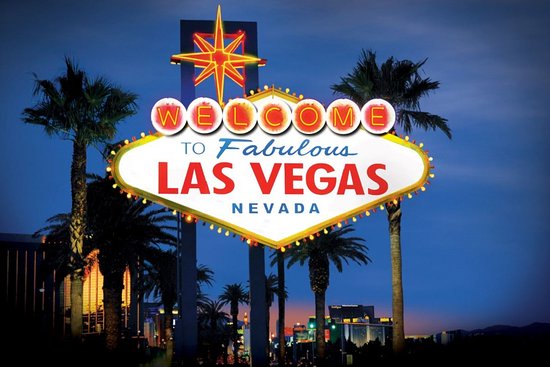
The City of Las Vegas and often known simply as Vegas, is the 28th-most populated city in the United States, the most populated city in the state of Nevada, and the county seat of Clark County. The city anchors the Las Vegas Valley metropolitan area and is the largest city within the greater Mojave Desert. Las Vegas is an internationally renowned major resort city, known primarily for its gambling, shopping, fine dining, entertainment, and nightlife. The Las Vegas Valley as a whole serves as the leading financial, commercial, and cultural center for Nevada.Image result for los vegas


The city bills itself as The Entertainment Capital of the World, and is famous for its mega casino–hotels and associated activities. It is a top three destination in the United States for business conventions and a global leader in the hospitality industry, claiming more AAA Five Diamond hotels than any other city in the world. Today, Las Vegas annually ranks as one of the world's most visited tourist destinations.The city's tolerance for numerous forms of adult entertainment earned it the title of Sin City, and has made Las Vegas a popular setting for literature, films, television programs, and music videos.
Las Vegas was settled in 1905 and officially incorporated in 1911. At the close of the 20th century, it was the most populated American city founded within that century (a similar distinction earned by Chicago in the 1800s). Population growth has accelerated since the 1960s, and between 1990 and 2000 the population nearly doubled, increasing by 85.2%. Rapid growth has continued into the 21st century, and according to a 2013 estimate, the population is 603,488 with a regional population of 2,027,828.
"Las Vegas" is often used to describe areas beyond official city limits—especially the areas on and near the Las Vegas Strip, which is actually located within the unincorporated communities of Paradise, Winchester, and Enterprise.

Image result for Fremont StreetFremont Street is a street in downtown Las Vegas, Nevada that is among the most famous streets in the Las Vegas Valleybesides the Las Vegas Strip. Named in honor of explorer John Charles Frémont and located in the heart of the downtowncasino corridor, Fremont Street is or was the address for many famous casinos such as Binion's Horseshoe, Eldorado Club, Fremont Hotel and Casino, Golden Gate Hotel and Casino, Golden Nugget, Four Queens, The Mint, and the Pioneer Club.

Fremont Hotel & Casino, Las Vegas
Prior to the construction of the Fremont Street Experience, the western end of Fremont Street was the representative scene for Las Vegas that was included in virtually every television show and movie that wanted to depict the glittery lights of Las Vegas. The abundance of neon signs, like cowboy Vegas Vic, earned the street the nickname of "Glitter Gulch".
Image result for Fremont StreetFremont Street is designated between Main Street and Sahara Avenue in a northwest–southeast direction, although auto traffic actually begins at Las Vegas Boulevard. At Sahara, it leaves Las Vegas proper and continues as Boulder Highway. Fremont Street formerly carried several national highways, including U.S. Route 93 (US 93), US 95, and US 466. US 93 and US 95 have 
been rerouted along Interstate 515, while US 466 has been decommissioned. The section of Fremont Street east of the Fremont East District is currently designated Nevada State Route 582.


Image result for paris


CITY OF LOVE

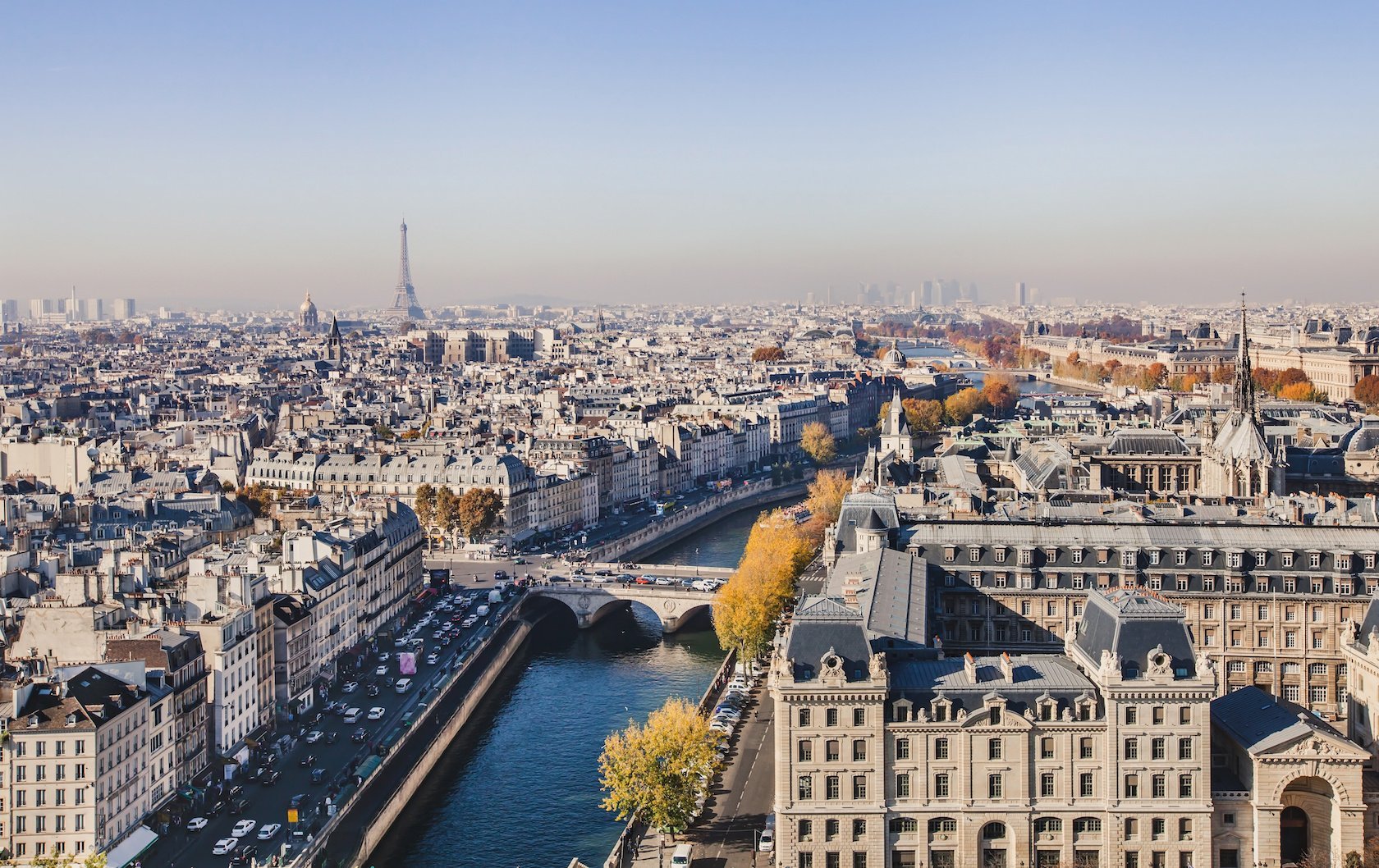
Paris, the cosmopolitan capital of France, is one Europe's largest cities, with 2.2 million people living in the dense, central city and almost 12 million people living in the whole metropolitan area. Located in the north of France on the river Seine, Paris has the well deserved reputation of being the most beautiful and romantic of all cities, brimming with historic associations and remaining vastly influential in the realms of culture, art, fashion, food and design. Dubbed the City of Light (la Ville Lumière) and Capital of Fashion, it is home to the world's finest and most luxurious fashion designers and cosmetics, such as Chanel, Dior, Yves Saint-Laurent, Guerlain, Lancôme, L'Oréal, Clarins, etc. A large part of the city, including the River Seine, is a UNESCO World Heritage Site. The city has the second highest number of Michelin restaurants in the world (after Tokyo) and contains numerous iconic landmarks, such as the world's most visited tourist site the Eiffel Tower, the Arc de Triomphe, the Notre-Dame Cathedral, the Louvre Museum, Moulin Rouge, and Lido, making it the most popular tourist destination in the world with 45 million tourists annually.
Image result for paris
Paris started life as the Celto-Roman settlement of Lutetia on the ÃŽle de la Cité, the island in the Seine currently occupied by the Cathédrale Notre-Dame. It takes its present name from the name of the dominant Gallo-Celtic tribe in the region, the Parisii. At least that's what the Romans called them, when they showed up in 52 BCE and established their city Lutetia on the left bank of the Seine, in what is now called the "Latin Quarter" in the 5th arrondissement.
The Romans held out here for as long as anywhere else in the Western Empire, but by 508 CE they were gone, replaced by Clovis of the Franks, who is considered by the French to have been their first king. Clovis' descendants, aka the Carolingians, held onto the expanded Lutetian state for nearly 500 years through Viking raids and other calamities, which finally resulted in a forced move by most of the population back to the islands which had been the centre of the original Celtic village. The Capetian Duke of Paris was voted to succeed the last of the Carolingians as King of France, ensuring the city a premier position in the medieval world. Over the next several centuries Paris expanded onto the right bank into what was and is still called le Marais (The Marsh). Quite a few buildings from this time can be seen in the 4th arrondissement.
The medieval period also witnessed the founding of the Sorbonne. As the "University of Paris", it became one of the most important centres for learning in Europe -- if not the whole world, for several hundred years. Most of the institutions that still constitute the University are found in the 5th, and 13th arrondissements.
In the late 18th century, there was a period of political and social upheaval in France and Europe, during which the French governmental structure, previously a monarchy with feudal privileges for the aristocracy and Catholic clergy, underwent radical change to forms based on Enlightenment principles of nationalism, citizenship, and inalienable rights. Notable events during and following the revolution were the storming of the Bastille 4th arrondissements, and the rise and fall of Napoleonic France. Out of the violent turmoil that was the French Revolution, sparked by the still known Passion des Français, emerged the enlightened modern day France.
The Paris of today was built long after the Capetian and later the Bourbon Kings of France made their mark on Paris with the Louvre and the Palais Royal, both in the 1st. In the 19th century, Baron von Hausmann set about reconstructing the city, by adding the long straight avenues and replacing many of the then existing medieval houses, with grander and more uniform buildings.
File:Paris-eiffel-tower.jpg
The Eiffel Tower, Paris
New wonders arrived during La Belle Époque, as the Parisian golden age of the late 19th century is known. Gustave Eiffel's famous tower, the first metro lines, most of the parks, and the streetlights (which are partly believed to have given the city its epithet "the city of light") all come from this period. Another source of the epithet comes from Ville Lumière, a reference not only to the revolutionary electrical lighting system implemented in the streets of Paris, but also to the prominence and aura of Enlightenment the city gained in that era.
The twentieth century was hard on Paris, but thankfully not as hard as it could have been. Hitler's order to burn the city was thankfully ignored by the German General von Choltitz who was quite possibly convinced by a Swedish diplomat that it would be better to surrender and be remembered as the saviour of Paris, than to be remembered as its destroyer. Following the war, the city recovered quickly at first, but slowed in the 1970s and 1980s when Paris began to experience some of the problems faced by big cities everywhere: pollution, housing shortages, and occasionally failed experiments in urban renewal.
During this time however, Paris enjoyed considerable growth as a multi-cultural city, with new immigrants from all corners of the world, especially La Francophonie, including most of northern and western Africa as well as Vietnam and Laos. These immigrants brought their foods and music, both of which are of prime interest for many travellers.
Immigration and multi-culturalism continues in the 21st century with a marked increase in the arrival of people from Latin America, especially Mexico, Colombia, and Brazil. In the late 1990s, it was hard to find good Mexican food in Paris, whereas today there are dozens of possibilities from lowly taquerias in the outer arrondissements to nice sit-down restaurants on the boulevards. Meanwhile Latin music from salsa to samba is all the rage (well, alongside Paris lounge electronica).
The 21st century has also seen vast improvements in the general liveability of Paris, with the Mayor's office concentrating on reducing pollution and improving facilities for soft forms of transportation including a huge network of cycle paths, larger pedestrian districts and newer faster metro lines. Visitors who normally arrive car-less are the beneficiaries of these policies as much as the Parisians themselves are.
Related imageBeing located in Western Europe, Paris has a maritime climate with cool winters and warm summers. The moderating effect of the Atlantic Ocean helps to temper temperature extremes in much of western Europe, including France. Even in January, the coldest month, temperatures nearly always exceed the freezing point with an average high of 6°C (43°F). Snow is not common in Paris, although it will fall a few times a year. Most of Paris' precipitation comes in the form of light rain year-round.
Summers in Paris are warm and pleasant, with an average high of 25°C (77°F) during the mid-summer months. Spring and fall are normally cool and wet.

With the weather being so pleasant in the summer, it's a great time to visit
Related image
Image result for paris
Related image

Manali

Image result for Manali
My one of the most favorite place in India is that Manali. Manali is a valley nestled in the mountains of the Indian state of Himachal Pradesh near the northern end of the Kullu valley, at an altitude of 2,050 m (6,726 ft) in the Beas River Valley. It is located in the Kullu district, about 270 km (168 mi) north of the state capital, Shimla, 309 km (192 miles) northeast of Chandigarh and 544 km (338 miles) northeast of Delhi, the federal capital. The small town, with a population of 8,096,is the beginning of an ancient trade route to Ladakh and from there over the Karakoram Pass on to Yarkand and Khotan in the Tarim Basin. It is a popular tourist destination and serves as the gateway to Lahaul and Spiti district as well as Leh.


Manali is located at 32.2396 N, 77.1887 E, about 40 km (25 mi) north of Kullu town. The town ranges in elevation from 1,800 m (5,900 ft) to 2,000 m (6,600 ft) in the uppermost Old Manali section.


The climate in Manali is predominantly cold during winter and moderately cool during summer. The temperatures range from 4 °C (39 °F) to 26 °C (79 °F) over the year. The average temperature during summer is between 10 °C (50 °F) and 26 °C (79 °F), and between −15 °C (5 °F) and 12 °C (54 °F) in the winter.
Monthly precipitation varies between 31 mm (1.2 in) in November and 217 mm (8.5 in) in July. On average, some 45 mm (1.8 in) of precipitation is received during winter and spring months, increasing to some 115 mm (4.5 in) in summer as the monsoon approaches. The average total annual precipitation is 1,363 mm (53.7 in). Manali experiences snowfall predominantly between December and beginning of March. The month of January is when it is usually the highest.
Image result for Manali

Manali is named after the Sanatan Hindu lawgiver Manu. The name Manali is regarded as the derivative of 'Manu-Alaya' which literally means 'the abode of Manu'. Legend has it that sage Manu stepped off his ark in Manali to recreate human life after a great flood had deluged the world. Manali lies in the North of Kullu Valley. The valley is often referred to as the 'Valley of the Gods'. Old Manali village has an ancient temple dedicated to sage Manu.
The British introduced apple trees in the area. The first apple orchard was set up by the British near Patlikuhl, prior to this no Apple trees grew in the area. To this day, apple—along with plum and pear—remain the best source of income for the majority of inhabitants. Both Rainbow and Brown Trout was also introduced into the rivers and streams of the area by the colonisers.
Before other luminaries started visiting Manali, India's first Prime Minister Jawaharlal Nehru favoured this as a holiday destination in the mountains.[citation needed]
With the increase in disposable incomes and somewhat owing to the rise of disturbances in Kashmir in the late 1980s, Manali witnessed a surge in tourist traffic. This once quiet village was transformed into a bustling town with numerous homestays as well as the occasional boutique hotel. During the warmer summer months, cafes and restaurants can be seen doing brisk business.
Image result for ManaliImage result for ManaliImage result for Manali Manali has witnessed a flurry of activity related to hydroelectric power and tourism. Unplanned and rampant construction has led to severe depletion of forests and pollution of river bodies, along with garbage being disposed on the side of the mountains. There has been a loss of habitat to various species of fauna, not limited to the Himalayan Monal, incidentally the state bird of Himachal Pradesh. This prompted the National Green Tribunal to intervene and limit vehicular movement on the popular Manali - Rohtang Pass highway, as well as Solang Valley. This has somewhat arrested the damage, however, a lot stillneeds to be done.

Image result for Manali

Saturday, 3 February 2018


Taj Mahal

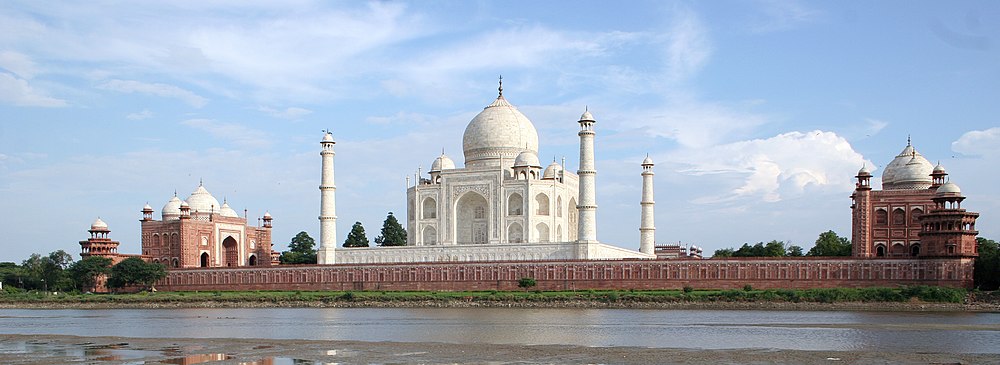
The Taj Mahal meaning Crown of the Palace is an ivory-white marble mausoleum on the south bank of the Yamuna river in the Indian city of Agra. It was commissioned in 1632 by the Mughal emperor, Shah Jahan (reigned from 1628 to 1658), to house the tomb of his favorite wife, Mumtaz Mahal. The tomb is the centerpiece of a 17-hectare (42-acre) complex, which includes a mosque and a guest house, and is set in formal gardens bounded on three sides by a crenelated wall.
Construction of the mausoleum was essentially completed in 1643 but work continued on other phases of the project for another 10 years. The Taj Mahal complex is believed to have been completed in its entirety in 1653 at a cost estimated at the time to be around 32 million rupees, which in 2015 would be approximately 52.8 billion rupees (the U.S. $827 million). The construction project employed some 20,000 artisans under the guidance of a board of architects led by the court architect to the emperor, Ustad Ahmad Lahauri.
The Taj Mahal was designated as a UNESCO World Heritage Site in 1983 for being "the jewel of Muslim art in India and one of the universally admired masterpieces of the world's heritage". It is regarded by many as the best example of Mughal architecture and a symbol of India's rich history. The Taj Mahal attracts 7–8 million visitors a year. In 2007, it was declared a winner of the New7Wonders of the World (2000–2007) initiative.


The Taj Mahal was commissioned by Shah Jahan in 1631, to be built in the memory of his wife Mumtaz Mahal, a Persian princess who died giving birth to their 14th child, Gauhara Begum. Construction of the Taj Mahal began in 1632.The imperial court documenting Shah Jahan's grief after the death of Mumtaz Mahalillustrate the love story held as the inspiration for Taj Mahal. The principal mausoleum was completed in 1643 and the surrounding buildings and garden were finished about five years later.


Design & Architecture:
The Taj Mahal incorporates and expands on design traditions of Persian and earlier Mughal architecture. Specific inspiration came from successful Timurid and Mughal buildings including the Gur-e Amir (the tomb of Timur, the progenitor of the Mughal dynasty, in Samarkand), Humayun's Tomb, Itmad-Ud-Daulah's Tomb(sometimes called the Baby Taj), and Shah Jahan's own Jama Masjid in Delhi. While earlier Mughal buildings were primarily constructed of red sandstone, Shah Jahan promoted the use of white marble inlaid with semi-precious stones. Buildings under his patronage reached new levels of refinement.
 
The base structure is a large multi-chambered cube with chamfered corners forming an unequal eight-sided structure that is approximately 55 meters (180 ft) on each of the four long sides. Each side of the iwan is framed with a huge pishtaq or vaulted archway with two similarly shaped arched balconies stacked on either side. This motif of stacked pishtaqs is replicated on the chamfered corner areas, making the design completely symmetrical on all sides of the building. Four minarets frame the tomb, one at each corner of the plinth facing the chamfered corners. The main chamber houses the false sarcophagi of Mumtaz Mahal and Shah Jahan; the actual graves are at a lower level.


The exterior decorations of the Taj Mahal are among the finest in Mughal architecture. As the surface area changes, the decorations are refined proportionally. The decorative elements were created by applying paint, stucco, stone inlays or carvings. In line with the Islamic prohibition against the use of anthropomorphic forms, the decorative elements can be grouped into either calligraphy, abstract forms or vegetative motifs. Throughout the complex are passages from the Qur'an that comprise some of the decorative elements. Recent scholarship suggests that the passages were chosen by Amanat Khan
 

The interior chamber of the Taj Mahal reaches far beyond traditional decorative elements. The inlay work is not pietra dura, but a lapidary of precious and semiprecious gemstones. The inner chamber is an octagon with the design allowing for entry from each face, although only the door facing the garden to the south is used. The interior walls are about 25 meters (82 ft) high and are topped by a "false" interior dome decorated with a sun motif. Eight pishtaq arches define the space at ground level and, as with the exterior, each lower pishtaq is crowned by a second pishtaq about midway up the wall.The four central upper arches form balconies or viewing areas, and each balcony's exterior window has an intricate screen or jali cut from marble. In addition to the light from the balcony screens, light enters through roof openings covered by chattris at the corners.

         The octagonal marble screen or jali bordering the cenotaphs is made from eight marble panels carved through with intricate pierce work. The remaining surfaces are inlaid in delicate detail with semi-precious stones forming twining vines, fruits, and flowers. Each chamber wall is highly decorated with dado bas-relief, intricate lapidary inlay and refined calligraphy panels which reflect, in miniature detail, the design elements seen throughout the exterior of the complex.


The Taj Mahal is built on a parcel of land to the south of the walled city of Agra. Shah Jahan presented Maharajah Jai Singh with a large palace in the center of Agra in exchange for the land.An area of roughly 1.2 hectares (3 acres) was excavated, filled with dirt to reduce seepage, and leveled at 50 meters (160 ft) above riverbank. In the tomb area, wells were dug and filled with stone and rubble to form the footings of the tomb. Instead of lashed bamboo, workmen constructed a colossal brick scaffold that mirrored the tomb. The scaffold was so enormous that foremen estimated it would take years to dismantle.